A practical selection guide by WaldyTech
Selecting the right GNSS receiver is one of the most important decisions in any positioning system. The choice impacts accuracy, resilience, size, cost, and long-term upgradeability. This guide walks you through the key decision points, from accuracy requirements to form factor, helping you match the right NovAtel OEM7 receiver configuration to your specific application.
1. What Accuracy Do You Need?
NovAtel OEM7 receivers support multiple positioning modes, each delivering a different level of accuracy. Your choice depends on the operational environment, available infrastructure, and budget.
| Positioning Mode |
Typical Accuracy (Horizontal) |
Infrastructure Required |
Convergence |
| Single Point (SP) |
1.2 m RMS |
None |
Instant |
| DGNSS / SBAS |
40 cm RMS |
SBAS satellites (free) |
Instant |
| TerraStar-L |
50 cm (95%) |
L-Band antenna + subscription |
Minutes |
| TerraStar-C PRO |
2.5 cm (95%) |
L-Band antenna + subscription |
< 3 minutes (RTK From the Sky) |
| TerraStar-X Regional |
2 cm (95%) |
L-Band antenna + subscription |
< 60 seconds |
| RTK |
1 cm + 1 ppm |
Base station or network |
Seconds |
| RTK ASSIST |
Maintains RTK accuracy |
RTK + TerraStar subscription |
Bridges outages up to 20 min |
| RTK ASSIST PRO |
Maintains RTK + independent cm |
RTK + TerraStar subscription |
Indefinite cm-level without RTK |
Understanding the Trade-offs
RTK delivers the highest accuracy (approximately 1 cm) but requires a physical base station or connection to a third-party RTK network. This adds equipment cost, operational complexity, and a dependency on reliable data links between base and rover.
TerraStar-C PRO is the leading satellite-delivered correction service. With RTK From the Sky technology, it converges to centimetre-level accuracy in under three minutes globally, with no base station required. TerraStar-C PRO corrections are delivered via geostationary L-Band satellites with 99.999% uptime, making it ideal for remote, mobile, or wide-area operations.
TerraStar-X Regional provides the fastest convergence (under 60 seconds to 2 cm accuracy) and works seamlessly alongside TerraStar-C PRO to maintain continuous centimetre-level positioning at the edges of coverage areas.
DGNSS operates on L1 frequency with approximately 40 cm accuracy. It is fast, reliable, and cost-effective for applications where sub-metre accuracy is sufficient.
Single Point (SP) provides approximately 1.2 m RMS accuracy with no infrastructure at all. It is the fastest, simplest, and most affordable option.
A key consideration: A TerraStar-capable receiver provides full-capability operation during an active subscription on multi-constellation, multi-frequency signals. This means a receiver purchased with a basic model can be upgraded to TSCP service later, saving significant cost compared to purchasing a dedicated multi-frequency RTK receiver upfront.
2. Do You Need GNSS-Based Heading?
If your application requires heading (direction of travel relative to true North) derived from GNSS rather than from motion, you need a dual-antenna receiver. NovAtel’s ALIGN technology computes heading from two antennas mounted at a known separation.
| Antenna Separation |
Heading Accuracy |
| 0.5 m |
0.40° |
| 1.0 m (recommended minimum) |
0.20° |
| 2.0 m |
0.08° |
Single antenna receiver (PwrPak7): Use when heading is not required, or when heading will be derived from an IMU via SPAN.
Dual antenna receiver (PwrPak7D, OEM7720): Use when you need GNSS-based heading without an IMU, or to enhance SPAN INS alignment speed and long-term heading stability.
The PwrPak7D and OEM7720 contain the hardware for dual-antenna ALIGN without needing a second receiver. Greater antenna separation delivers better heading accuracy, so mount antennas as far apart as the platform allows, with 1 metre as the recommended minimum.
3. GNSS Only or SPAN (GNSS/INS)?
This is one of the most important decisions. A GNSS-only receiver provides position and velocity. SPAN adds an Inertial Measurement Unit (IMU) that is tightly or deeply coupled with the GNSS solution, providing:
- Full attitude: roll, pitch, and heading derived from the IMU
- Continuous positioning during GNSS outages (urban canyons, tunnels, parking structures, foliage, temporary jamming)
- Smoother trajectories and higher output rates (up to 200 Hz)
- Improved accuracy in dynamic environments
Choose SPAN when your application involves any of the following:
- Need for attitude data (roll, pitch, heading) for platform stabilization, pointing, or control
- Expected GNSS outages due to obstructed sky view, urban environments, or intentional jamming
- High-dynamic platforms (UAVs, missiles, fast-moving vehicles)
- Requirements for continuous, gap-free trajectory data
Choosing the Right IMU for SPAN
The accuracy of SPAN during GNSS outages depends primarily on the grade of the IMU. Higher-grade IMUs maintain better accuracy for longer periods without GNSS corrections. NovAtel SPAN supports a wide range of IMUs, from tactical grade to navigation grade.
Integrated vs. Separated Enclosures
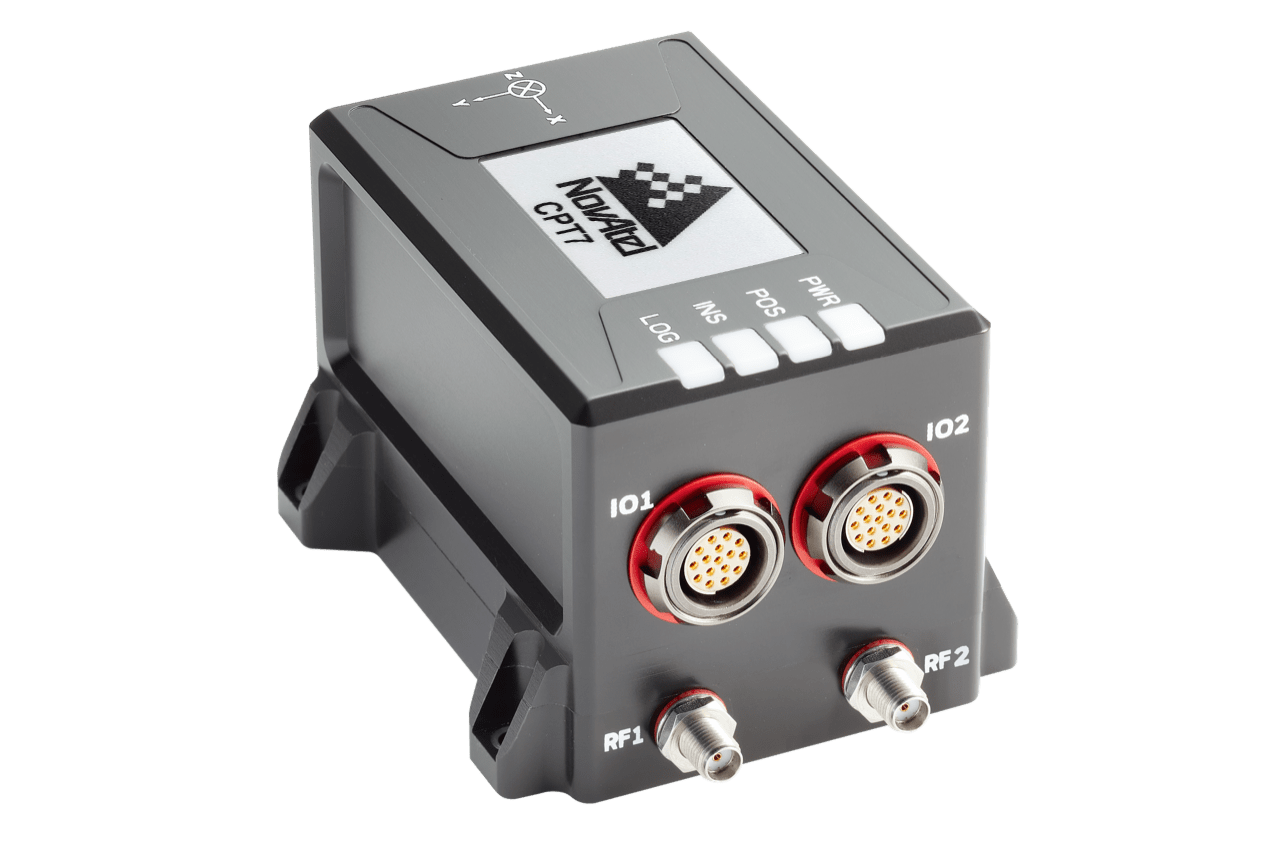
Combined enclosure (CPT7, PwrPak7-E1/E2): The IMU and GNSS receiver are housed together in a single unit. This is the simplest integration path, with minimal wiring and a single mounting point. The CPT7 now includes 16 GB onboard memory, improved Honeywell IMU, LEDs, and wheel sensor input.
Separated (OEM solution): The IMU and OEM7 receiver card are physically separated. The OEM7 card is mounted in your own enclosure while the IMU is placed directly on the moving object. This requires some mechanical and electrical integration (a few wires), but provides flexibility when you need a compact IMU mounted in a specific location, such as an Epson EG370 or EG320 IMU on a gimbal or turret.
4. OEM Card or Ready-Made Enclosure?
NovAtel offers two paths to integration:
OEM receiver cards (OEM719, OEM729, OEM7700, OEM7720, OEM7600): Compact circuit boards designed for integration inside your own enclosure. You provide the mechanical housing, power regulation, and connector interfaces. This saves space and weight, and is ideal for defence applications where the receiver is embedded inside a larger system. The OEM7600 is the most compact option with high-vibration rating, while the OEM7700 offers the widest interface options.
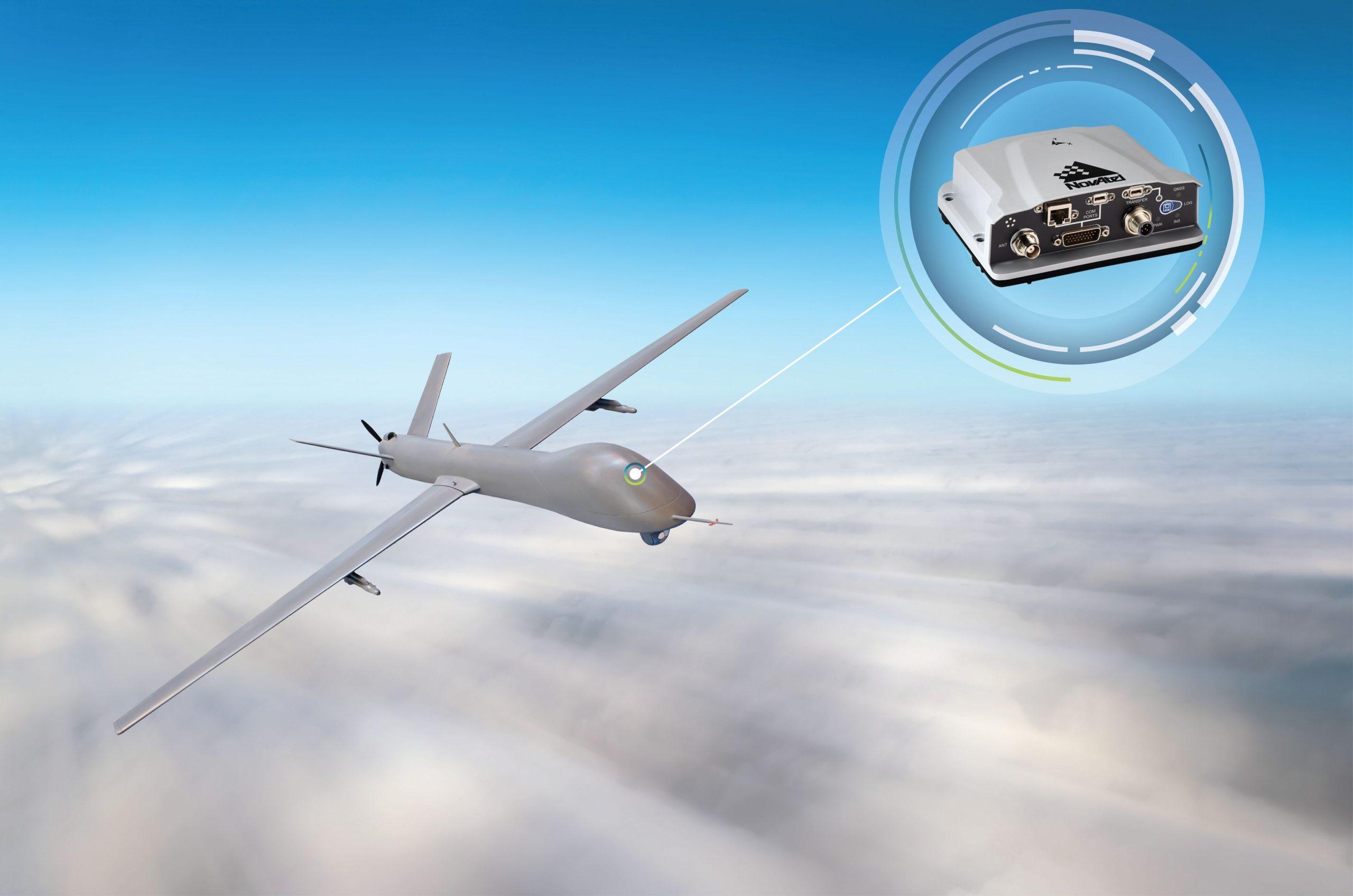
Ready-made enclosures (PwrPak7, PwrPak7D, CPT7): Fully enclosed, ruggedized receivers with built-in power conditioning, multiple communication ports (serial, USB, Ethernet, CAN), and environmental protection. Connect power, antenna, and communications and you are operational. The PwrPak7 is rated for demanding environmental conditions including high vibration and wide temperature ranges, making it popular for UAV, UGV, and autonomous vehicle applications.
For most defence and system integration applications, OEM cards offer the best trade-off between size, weight, and flexibility. For field-deployable systems, autonomous vehicles, and applications where rapid deployment matters, the PwrPak7 enclosures save significant integration time.
5. Antenna Selection
GNSS receiver performance is highly dependent on antenna selection. A critical point: NovAtel receivers can be firmware-upgraded to support additional frequencies and constellations, but antennas cannot. If you select an antenna that only supports L1/L2, you will not be able to take advantage of L5 or E6 signals even after a firmware upgrade.
When selecting an antenna, ensure it supports the frequencies your current and future GNSS configuration will use. For TerraStar services, the antenna must support L-Band reception. For best TerraStar performance, NovAtel recommends an antenna with full GNSS signal support: GPS L1/L2/L5, GLONASS L1/L2, Galileo E1/E5a/E5b/E6, and BeiDou B1C/B2a/B2b/B3.
WaldyTech also represents Antcom, a leading manufacturer of high-performance GNSS antennas for defence, aerospace, and commercial applications and other antenna manufacturers. We can help match the right antenna to your receiver and operational environment.
6. Communication Protocols and Interfaces
NovAtel OEM7 receivers support a comprehensive range of output formats and correction protocols:
Output Formats
- NovAtel proprietary format (ASCII, Abbreviated ASCII, and Binary)
- NMEA 0183 (standard marine/navigation protocol)
- NMEA 2000 (CAN-based marine protocol)
- NOVATELX (extended proprietary format)
Correction Input Formats
- RTCM v3.x (standard RTK corrections)
- RTCA (aviation corrections)
- CMR / CMR+ (compact measurement record)
- TerraStar L-Band (satellite-delivered PPP corrections)
Post-Processing
- RINEX export for post-processing in NovAtel Inertial Explorer or third-party software
- NovAtel Waypoint software suite for post-processed positioning and trajectory analysis
Physical Interfaces
- Serial RS-232 (multiple ports)
- USB
- Ethernet (with web interface for configuration)
- CAN bus
NovAtel also provides drivers for multiple operating systems including Windows, Linux, and ROS (Robot Operating System), facilitating integration with autonomous platforms and robotic systems.
7. Typical Applications
Defence: OEM7 cards and SPAN systems are widely deployed in guided munitions, UAVs, UGVs, naval systems, and soldier navigation. GRIT anti-spoofing technology and GAJT anti-jam antennas provide resilience against electronic warfare threats.
Aerospace: SPAN GNSS/INS systems provide attitude and trajectory data for flight testing, airborne survey, and space launch vehicle tracking.
Autonomous vehicles: PwrPak7 enclosures with SPAN and TerraStar provide the continuous, high-accuracy positioning required for autonomous driving, mining, and agricultural platforms.
Survey and mapping: RTK and TerraStar-C PRO deliver centimetre-level accuracy for mobile mapping, LiDAR, and photogrammetry applications.
Agriculture: NovAtel is the equipment of choice for precision agriculture guidance, with TerraStar corrections providing repeatable, base-station-free positioning across large fields.
Automotive: OEM7 receivers support ADAS and autonomous driving development with high-accuracy reference positioning and SPAN inertial integration.
8. Why NovAtel?
- Industry-leading accuracy across all positioning modes, from single point through RTK and PPP
- Multi-constellation, multi-frequency (MCMF) support including GPS, GLONASS, Galileo, BeiDou, QZSS, NavIC L5, and SBAS
- Built-in resilience: GRIT interference mitigation and spoofing detection on all OEM7 receivers
- TerraStar correction services supported on all OEM7 receivers, with field-upgradeable firmware
- Seamless upgrade path: start with single point, upgrade to DGNSS, TerraStar, RTK, or SPAN at any time via firmware activation
- FOC multi-constellation, multi-frequency operation included with active TerraStar subscription
- SPAN compatibility: any OEM7 receiver can be upgraded to a full GNSS/INS solution
- Proven heritage across thousands of defence, aerospace, agriculture, and autonomous programs worldwide
- Frequent firmware updates with documented release notes and product change notifications (PCN)
- Fast lead times, typically a few weeks even for large quantities
- Excellent global support with rapid response and escalation paths for challenging integration scenarios
- Post-processing tools (Inertial Explorer, Waypoint) available through WaldyTech
- Drivers available for Windows, Linux, and ROS
Need help selecting the right configuration? WaldyTech has over 20 years of experience helping Israeli defence, aerospace, and technology companies choose and integrate NovAtel GNSS solutions. Contact us for a technical consultation tailored to your specific application.