A practical selection guide by WaldyTech
Vibration testing is essential for qualifying defence, aerospace, automotive, and industrial components against real-world mechanical stress. Whether you are testing an IMU, a circuit board, or an entire satellite subsystem, selecting the right shaker determines the accuracy, efficiency, and reliability of your test results.
This guide walks you through the key decision points.
What Is a Vibration Test System?
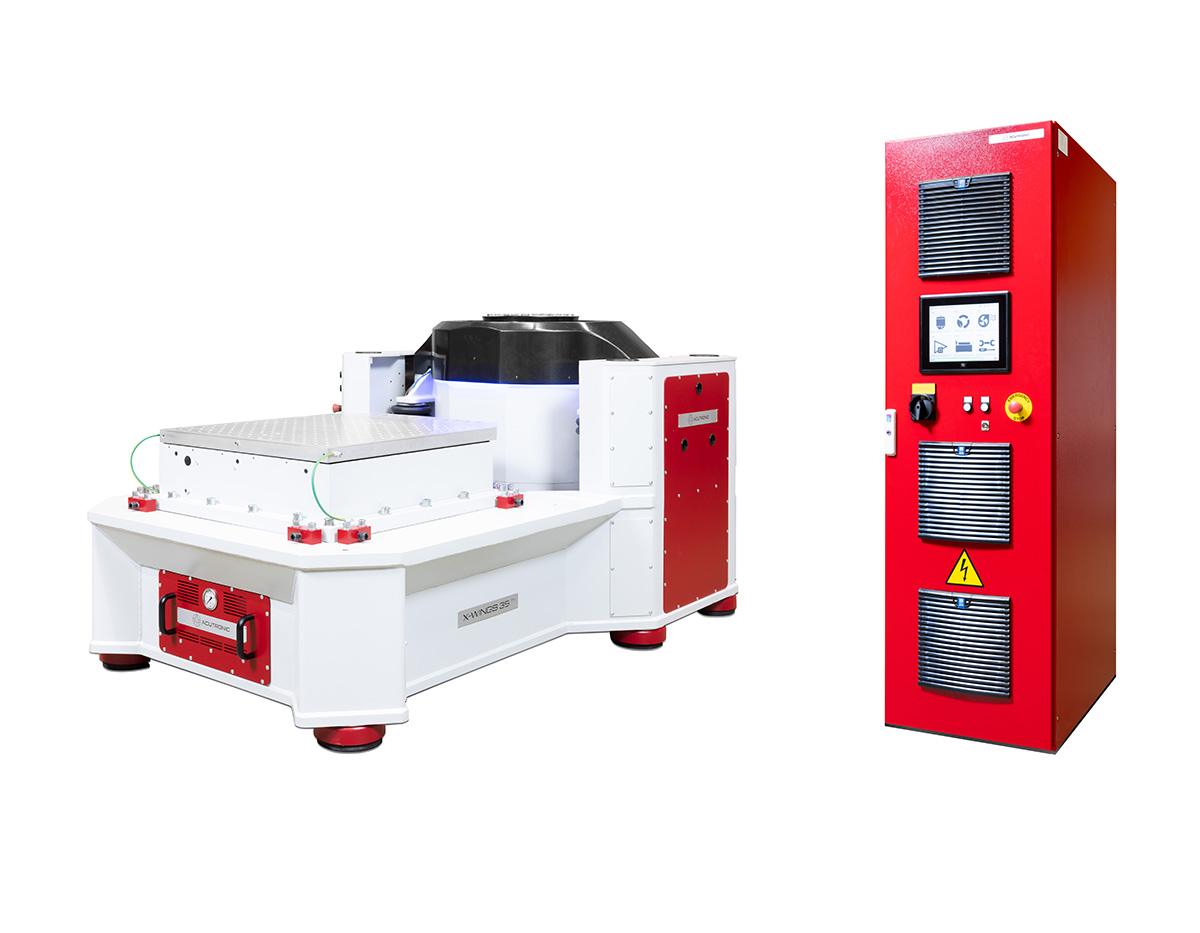
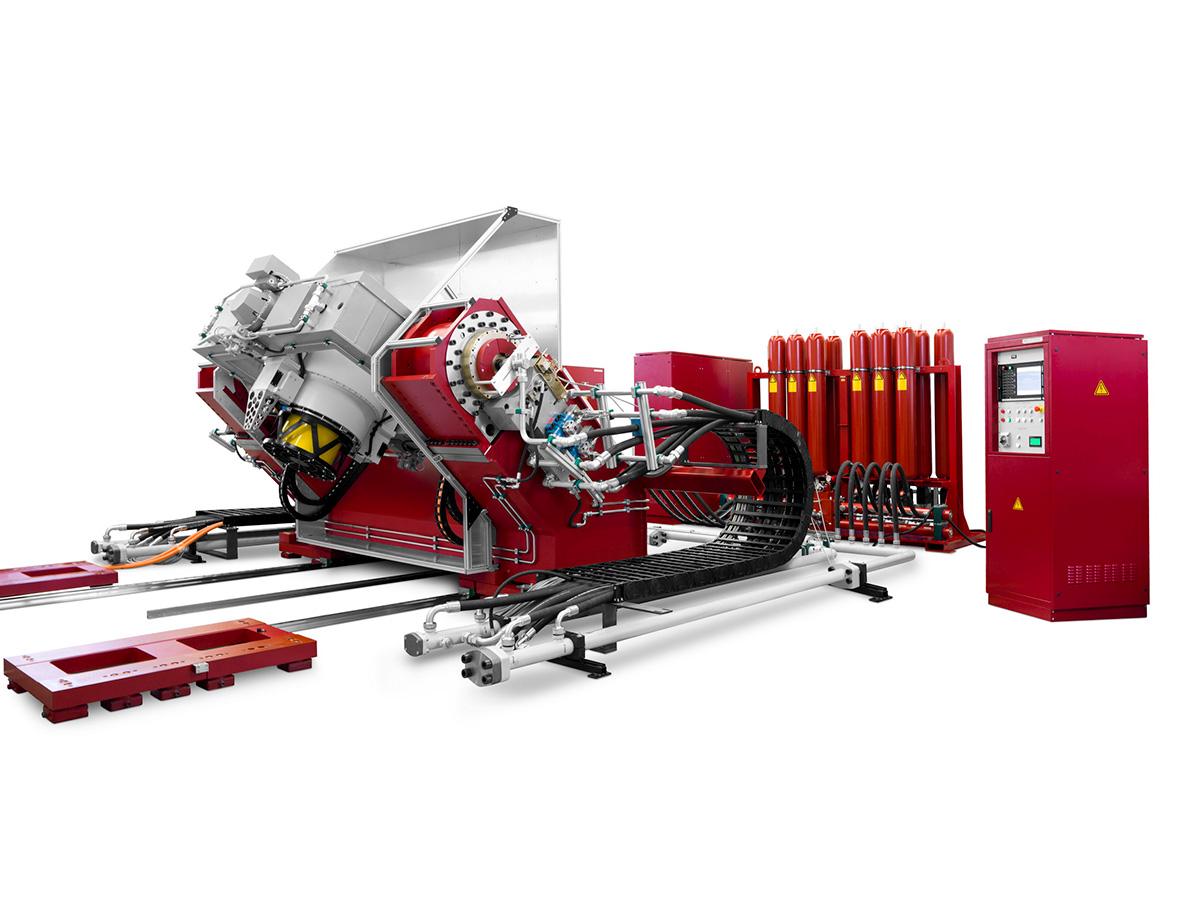
A vibration test system (commonly called a shaker) generates controlled mechanical vibrations to simulate the conditions a product will experience during its lifecycle. The system consists of three main components: the shaker body (which generates the vibration force), the power amplifier (which drives the shaker), and a slip table or head expander (which provides the mounting interface for the test object).
Types of Vibration Systems
There are three main technologies:
Electrodynamic systems use electromagnetic force to generate vibration. They offer the widest frequency range, highest precision, and best controllability. This is the technology of choice for defence, aerospace, and high-performance testing.
Servo-hydraulic systems use hydraulic actuators. They deliver high force at low frequencies but lack the frequency range and precision of electrodynamic systems.
Mechanical systems use rotating masses. They are the simplest but offer limited control and frequency range.
For defence and aerospace applications requiring sine, random, shock, and mixed-mode testing across a wide frequency band, electrodynamic is the standard.
Key Specifications to Consider
Force output (kN): Determines the maximum payload and acceleration you can achieve. Systems range from 40 kN for smaller components to 300 kN for large assemblies.
Frequency range (Hz): Most electrodynamic shakers operate from 5 to 2,500 Hz, with some extending higher. Ensure the range covers your test standards (MIL-STD-810, DO-160, etc.).
Acceleration (g): Peak acceleration for sine testing and RMS acceleration for random vibration. Typical values range from 70g to 180g sine and 70g RMS random.
Armature diameter (mm): Determines the size of test objects you can mount. Ranges from 400 mm to 650 mm for standard systems.
Payload capacity (kg): Static payload ratings range from 600 kg to 1,200 kg depending on the model.
Cooling type: Smaller systems use air cooling. Higher-force systems (typically 70 kN and above) require water cooling for sustained operation.
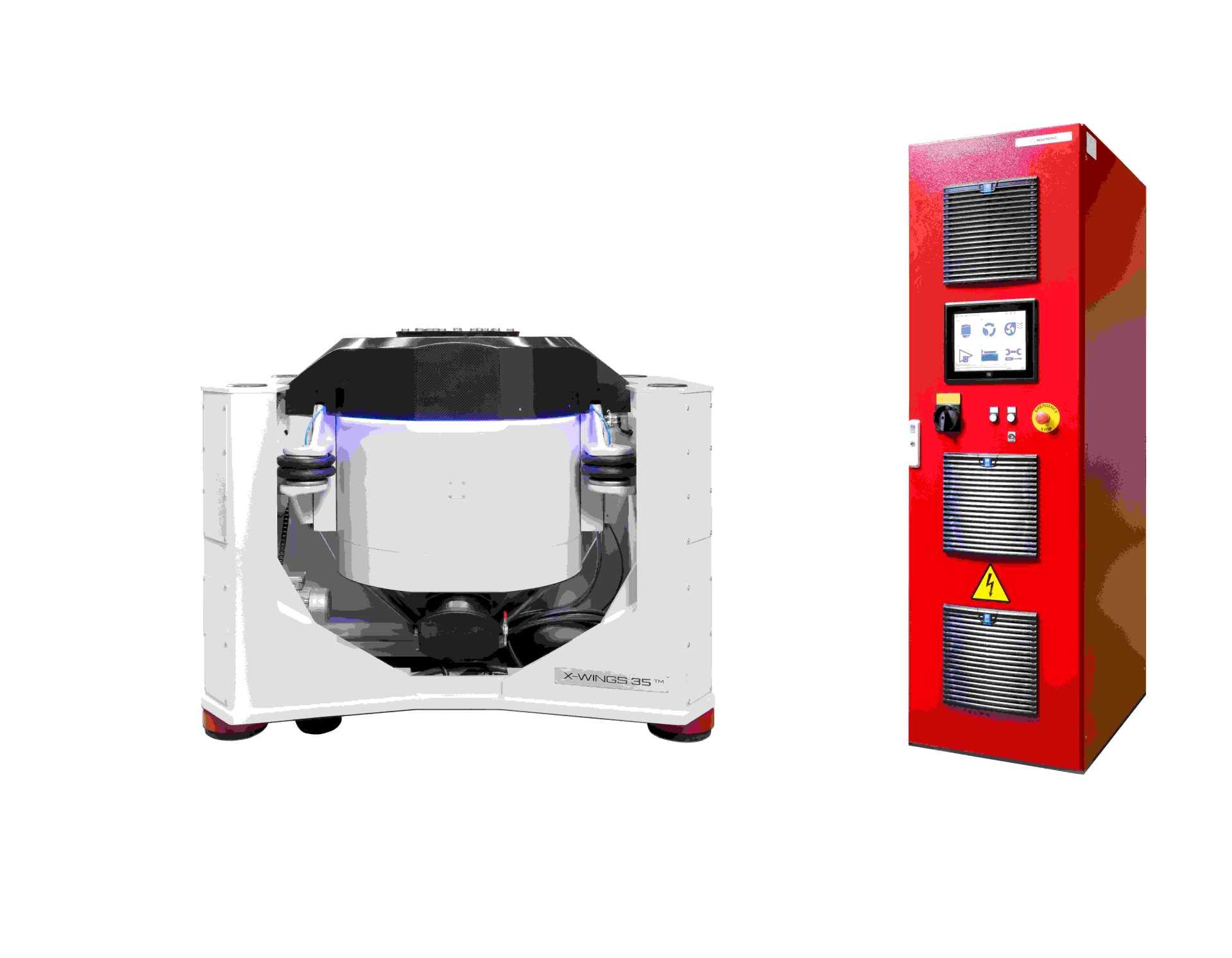
Configuration: Vertical (vibration axis pointing up) or horizontal (using a slip table). Some systems support both orientations with a motorized tilting mechanism for quick changeover.
What Sets a Great Shaker Apart
Beyond the basic specifications, several design and engineering factors separate a good vibration system from a great one.
Flexure guidance. The armature suspension determines cross-axis performance and long-term reliability. Look for systems using four springs arranged at 90 degrees (X-pattern) rather than simple leaf springs. This provides excellent cross-axis performance with a robust, low-maintenance design and a travel range of up to 3 inches.
In-axis cable routing. All cables, air pressure lines, and water lines should be arranged along the tilting axis. This eliminates cable bundle wear, extends cable life, simplifies the tilting mechanism, and reduces maintenance.
Motorized swivel mechanism. Changing between vertical and horizontal testing should be a push-button operation, not a crane job. A motorized tilting mechanism with robust end stops and a slip clutch enables fast, safe orientation changes.
Coupling bar positioning. The coupling bar connects the shaker to the slip table. Look for a design where the bar mounts to the armature via precision positioning pins, delivering repeatable alignment every time you change orientation.
Modular, scalable amplifier. The power amplifier should be built from interchangeable power modules. If one module fails, the system continues to operate on the remaining modules. This dramatically reduces downtime.
Energy efficiency. Power consumption per kN of force output varies significantly between manufacturers. More efficient systems mean lower operating costs, less thermal stress on coils and amplifiers, and more stable long-term operation. Look for systems achieving 1.0 to 1.2 kVA/kN efficiency ratios.
Intuitive controls. A modern shaker should have a touchscreen GUI with clear status pages for the shaker, power, energy, cooling, slip table, and maintenance. Visual status indicators (colour-coded LED rings) allow operators to monitor system health at a glance, even from across the lab.
IoT and connectivity. EtherCAT communication, datalogging in the PLC, and IoT readiness enable remote monitoring, predictive maintenance, and integration with factory automation systems.
Clean, self-contained design. The best systems have no external cables, no external pneumatic boxes, no external hydraulic units. Just the shaker and its cabinet. The hydraulic unit should be located within the base beneath the slip table, with no hoses or cables visible on the body.
Why Acutronic iMPULSE X-Wings35
Acutronic’s iMPULSE X-Wings35 electrodynamic vibration system was designed from the ground up to address every selection criterion above.
Scalable product line. Seven standard vertical sizes (40 to 300 kN) and five horizontal combobase slip table configurations, with air or water cooling options. One platform covers the full range of defence and aerospace test requirements.
Best-in-class efficiency. The X-Wings35 achieves 1.0 to 1.2 kVA/kN power consumption, significantly lower than competitors operating at 1.4 to 2.8 kVA/kN. This means lower energy costs, less thermal stress, and more stable long-term operation.
Fully modular amplifier. Built from identical, interchangeable power modules with robust SiC MOSFET design. If one module fails, the system keeps running. Safe power-on sequence with no field supply without blower, no module power-on without field, soft start, and automatic capacitor discharge after shutdown.
Swiss precision engineering. Cast and welded structures deliver structural stiffness and performance control. Components available in stock for short delivery times.
Complete self-contained design. No external cables on the body, no external pneumatic or hydraulic boxes. Just the shaker and its cabinet.
Intuitive AcuVibe Commander interface. Six-category touchscreen GUI with real-time monitoring of shaker status, energy consumption, cooling temperatures, power, slip table position, and maintenance alerts. Visual colour-coded LED status visible from across the lab.
Named after the X-Wing Starfighter. The iMPULSE X-Wings35 takes its name from the iconic Star Wars spacecraft, reflecting the four flexure springs arranged in an X-pattern and the force of 35 kN per module.
iMPULSE X-Wings35 Product Line at a Glance
All models: 100g sine acceleration, 70g rms random acceleration, 180g shock acceleration, 63.5 mm displacement (sine), 76 mm displacement (shock). Velocity: 2 m/s sine, 3 m/s random, 3.5 m/s shock.Horizontal combobase slip tables available from 600×600 mm to 1400×1400 mm with standard or guided head expanders.Need help selecting the right vibration test system? WaldyTech has over 20 years of experience helping Israeli defence and aerospace companies choose and integrate Acutronic motion simulation and vibration test solutions. Contact us for a technical consultation tailored to your specific test requirements.
| Model |
Force Sine |
Force Random |
Shock |
Freq. Range |
Armature |
Payload |
Cooling |
| 40-400A |
40 kN |
40 kN rms |
120 kN |
5-2,500 Hz |
400 mm |
600 kg |
Air |
| 60-450A |
60 kN |
60 kN rms |
180 kN |
5-2,500 Hz |
450 mm |
600 kg |
Air |
| 70-450W |
70 kN |
70 kN rms |
210 kN |
5-2,500 Hz |
450 mm |
600 kg |
Water |
| 90-450W |
90 kN |
90 kN rms |
270 kN |
5-2,500 Hz |
450 mm |
600 kg |
Water |
| 120-600W |
120 kN |
120 kN rms |
360 kN |
5-2,000 Hz |
600 mm |
800 kg |
Water |
| 140-600W |
140 kN |
140 kN rms |
420 kN |
5-2,000 Hz |
600 mm |
800 kg |
Water |
| 200-650W |
200 kN |
200 kN rms |
600 kN |
5-2,000 Hz |
650 mm |
1,000 kg |
Water |
| 300-650W |
300 kN |
300 kN rms |
900 kN |
5-2,000 Hz |
650 mm |
1,200 kg |
Water |